Last updated: May 3, 2026
Sicily cultivates olives across more than 160,000 hectares, making it one of Italy's largest olive-producing regions by area. The island's topographic range — from coastal flatlands near Trapani and Agrigento to the interior highlands around Enna — means that grove management practices diverge considerably depending on elevation, access to irrigation, and the cultivar being grown.
Planting Density Models
Three distinct density tiers operate simultaneously in Sicily:
- Traditional extensive systems: 100–200 trees per hectare, often in century-old groves with irregular spacing. Harvested manually or by hand-held vibrating combs.
- Medium-density semi-intensive systems: 200–500 trees per hectare. These dominate in renovated groves from the 1980s–2000s, allowing tractor access between rows.
- Super-high-density (SHD) systems: 1,000–1,700 trees per hectare, planted in narrow hedgerow configurations. Mechanical harvesting with straddle harvesters is the standard here.
Super-High-Density Research in Aidone
A study conducted in the Aidone district of the Enna province compared canopy architecture of five cultivars planted in a SHD configuration. The cultivars examined — Arbequina, Arbosana, Oliana®, Giulia®, and FS-17® — showed markedly different performance within the hedgerow structure.
Giulia® and Oliana® formed compact, upright canopies that remained within the machinery's working envelope throughout the growing season, reducing the need for inter-row pruning interventions. FS-17® showed considerably higher vegetative vigour and canopy expansion. In practical terms, FS-17®'s larger canopy intercepted more light during establishment but required more aggressive pruning to maintain mechanical harvestability.
The research confirms that cultivar selection for SHD systems is not interchangeable: compact growth habit is a prerequisite, not an option, for economic viability in mechanical harvesting operations.
Irrigation Scheduling: The FAO56 Model in Castelvetrano
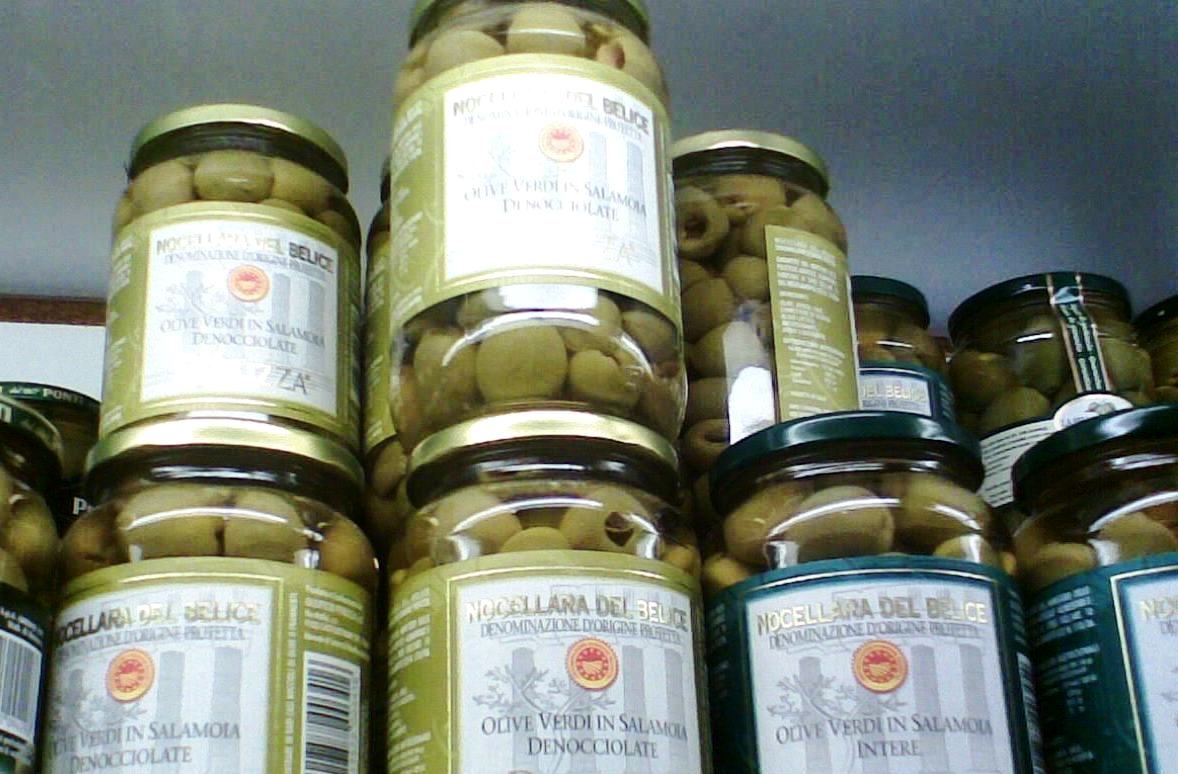
Sicily's semi-arid climate creates an agronomic dependency on supplemental irrigation for modern orchards, particularly in SHD configurations where trees produce heavier crop loads per unit area. In the Castelvetrano irrigation district — the production heartland of Nocellara del Belice DOP olives — researchers applied the FAO56 agro-hydrological model combined with Sentinel-2 multispectral satellite imagery to estimate crop water requirements across the growing season.
Model Performance
The FAO56-based system calculated irrigation volumes for individual plots with an error margin of approximately 3% relative to actual farmer-applied water volumes. This level of accuracy was achieved by integrating satellite-derived vegetation indices (NDVI and NDRE) to track canopy development and adjust crop coefficients in near-real time rather than relying on fixed seasonal tables.
The practical implication: growers who adopt model-based scheduling can reduce total applied water by 10–18% compared to conventional calendar-based methods without measurable yield penalty, according to the same research group's follow-up work on southern Italian olive groves.
Nocellara del Belice and Tonda Iblea: Contrasting Water Demands
Nocellara del Belice, cultivated predominantly in the Trapani province, is a dual-purpose variety used both for table olives and oil. It is sensitive to water stress during the fruit-set and cell-division phases (June–July), which directly affects fruit size — commercially critical for the table olive market. Irrigation during this window typically provides 30–50 mm supplemental water per week in dry years.
Tonda Iblea, native to the Ragusa province in south-eastern Sicily, is cultivated in higher-altitude zones between 300 and 700 metres. Its natural habitat receives somewhat higher rainfall from autumn frontal systems, reducing but not eliminating irrigation requirements. The cultivar's round fruit and distinctive flavour profile — fruity with tomato and almond notes — represent a different market segment from the more widely distributed Nocellara.
Water Footprint and Sustainability
Recent work on water footprint optimisation in southern Italian olive groves finds that conventional drip irrigation in semi-intensive systems uses between 2,500 and 4,000 cubic metres per hectare per year. SHD systems, despite higher tree counts, consume less water per kilogram of oil produced because yield per hectare increases proportionally more than water demand. Integration of organic fertilisers has been shown to improve soil water retention, reducing irrigation frequency without sacrificing tree performance.
Sources
- MDPI Agriculture — Canopy Architecture of Five Olive Cultivars in a High-Density Planting System in Sicily
- MDPI Land — Optimizing Water Footprint and Sustainability in Southern Italian Olive Groves
- MDPI Water — Sustainability of High-Density Olive Orchards: Irrigation Management
- University of Palermo — FAO56 Agro-Hydrological Model for Olive Irrigation Scheduling